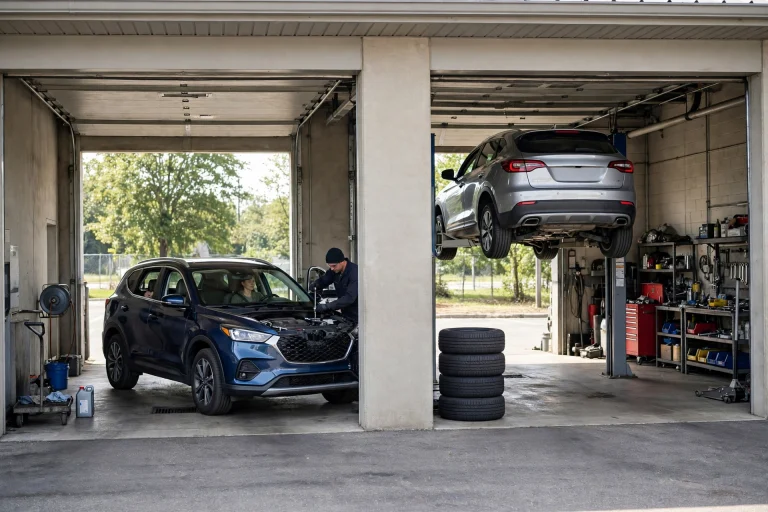
Take 5 vs Firestone Complete Auto Care: The Oil Change You Watch vs the One You Are Told About (November 2026)
Both chains will change your oil, but only Take 5 is built around letting you watch the work happen from the driver seat. At Firestone Complete Auto Care, you hand over the keys and learn what the technician found after the car comes off the lift.
That one difference shapes the whole comparison. It affects how recommendations reach you, how much trust you must place in a report, and what paperwork follows the visit. The minutes alone do not settle it. A visit you can observe is a different product from one built around a broader inspection.
| Take 5 Oil Change | Firestone Complete Auto Care | |
|---|---|---|
| Where you sit | You stay in the car while the team works around you | You hand over the keys and wait or drop off the car |
| Appointment | No appointment, booking or waiting room in the published visit model | Appointment framed; walk-ins are accepted, but on-the-spot service is not guaranteed |
| Published time claim | About 10 minutes for the whole visit | Most oil changes within 30 minutes; a standard oil change can take 15 minutes to an hour |
| What is checked | Air filter and wipers inspected, tire pressure checked, selected fluids topped off | Free courtesy inspection covering fluids, lights, belts, hoses, steering, suspension, battery, wipers and visible damage |
| Tires and rotation | No tire service or rotation offered | Rotation is a separate tire service and can be scheduled for the same appointment |
| Warranty as published | No warranty terms published on take5.com | Oil change covered for 3 months or 3,000 miles inside a broader nationwide warranty |
| Service record | A CARFAX Partner badge is published on the services page | No equivalent service record claim appears in the published oil change pitch |
| Locations | More than 1,400 locations, based on Take 5 releases dated August 2026 | More than 1,700 stores, as published on the Firestone oil change page |
The Witness Test: An Oil Change You Watch vs One You Are Told About
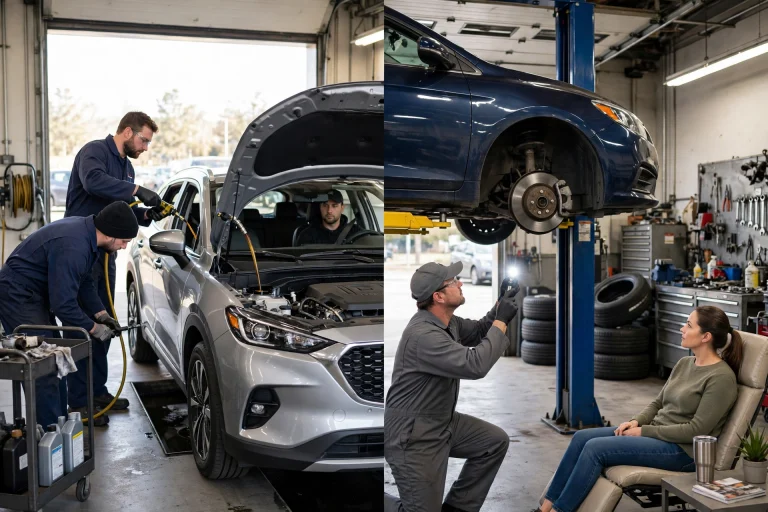
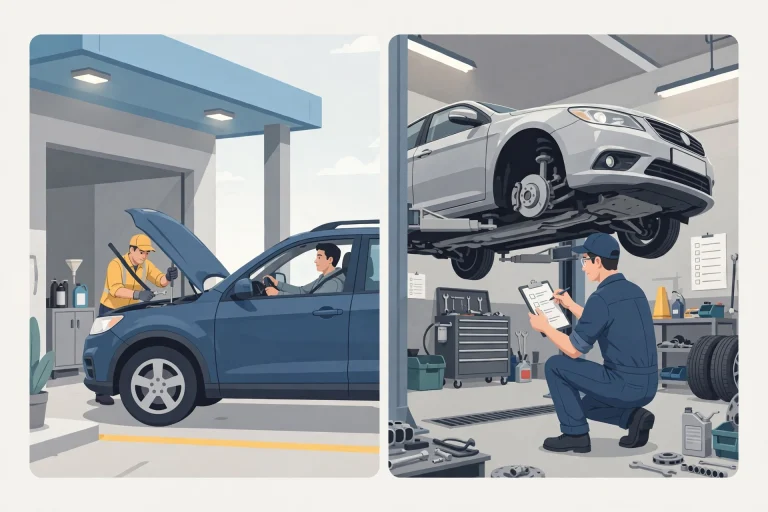
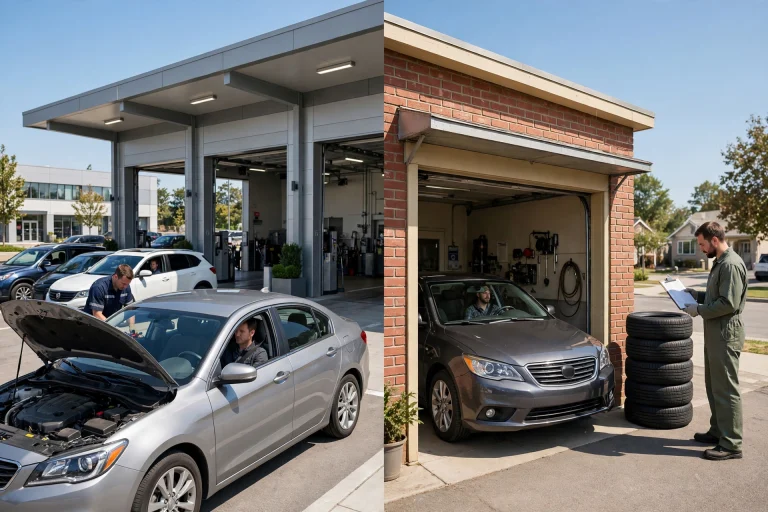
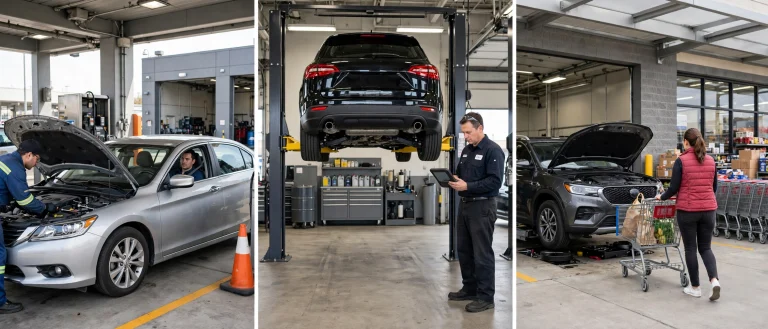
Take 5 gives the driver a front-row seat for the oil change, while Firestone asks the driver to rely on findings reported after the visit. Take 5 publishes the visit as four simple steps. The design removes the waiting room and keeps the customer inside the vehicle from arrival to departure.
- Pull right in to an open lane, with no appointment or booking.
- Stay in your car while the team starts work around you.
- Watch the service happen and see the oil being handled.
- Drive off when the visit is complete.
The company’s own wording makes the promise plain:
Watch the service happen and see your oil. We recommend, you decide. No pressure.
That wording matters because the driver is present while choices are being made, not briefed afterward. Take 5 also says its technicians keep you informed as they move through the oil change. Its FAQ adds that suggestions may be made, but “you are always in charge.”
When a technician points to an air filter or wiper from beside the car, the recommendation is tied to something in front of you. You can see the part, hear the reason, and decide before anything is replaced. The conversation happens during the visit, not as a summary after it.
Firestone runs a different kind of visit. The car is taken into the service area, placed on a lift, and checked by a technician outside your view. Its courtesy inspection is broader on paper. It covers fluid levels, lights, belts, hoses, steering, suspension, skid plates, undercarriage, wipers, battery and visible damage.
Breadth, however, is not the same as observability. You receive the findings as a list, and you judge the list without having watched the checks happen. That does not make the Firestone report unreliable. It does change what you can personally verify before approving more work or driving away.
At Take 5, the central oil change actions are part of the show. You can watch the old oil leave, the filter change, and fresh oil go in. You can also see when a fluid is topped off or a tire pressure check is performed. The visit produces fewer secondhand claims. Kids and pets stay buckled in while the team works around the car, because there is no waiting room to move them to.
There are honest limits to the witness test. Sitting in the driver seat does not let you confirm oil quality, correct torque, or every underbody detail. Some work still happens outside your direct line of sight. Presence improves visibility, not expertise. Still, the difference is real. Take 5 makes observation part of the service, while Firestone makes reporting the bridge between the technician and the driver.
Two Clocks That Measure Different Days
Take 5’s published clock covers the whole short visit, while Firestone’s clock runs inside an appointment system and can stretch with the courtesy check. Take 5 says most visits wrap up in about 10 minutes. Its FAQ gives the same figure for most oil changes.
That claim is believable as a design target because the visit is narrow. You stay in the car, the team performs a short list, and you leave. A line of cars can still slow any drive-thru. The published figure should be read as the chain’s normal visit claim, not a promise for every arrival.
Firestone publishes a wider range. Its material says most oil changes are completed within 30 minutes, while its service page puts a standard oil change at 15 minutes to an hour. The longer window fits a different workflow. Appointments must be received, the car must be moved, the oil changed, and the courtesy inspection completed.
Walk-ins add another variable. Firestone accepts them, but its own blog says it cannot guarantee that a walk-in will be serviced on the spot. A booked customer can therefore face a calmer wait than a walk-in, even when both came for the same basic service.
The pricing pages reveal another contrast. Firestone publishes national starting ranges by oil type, while Take 5 publishes no oil change price on its site. Drivers who want the figures tracked outside this comparison can use our Take 5 oil change prices page for what is known about that chain’s store-level pricing.
The matching Firestone oil change prices page follows the ranges and store variation for the full-service chain. The pattern is consistent. Take 5 publishes the visit, while Firestone publishes more service structure around it.
The Menu That Ends Early
Take 5’s menu is complete for a quick oil change visit, but it stops before tires, brakes and batteries; Firestone’s menu keeps going. That hard stop is easy to miss in a simple service list. At Take 5, the limited menu is not a missing page or a local variation.
The published national menu is built around a small group of fast maintenance jobs that can be performed while the driver remains in the car.
- Oil changes at all locations
- Air filter replacement at all locations
- Wiper replacement at all locations
- Coolant exchange at select locations
- State safety inspections and emissions checks at select locations
Once those jobs are done, the menu effectively ends. Take 5 does not offer tire sales, tire rotation, brake work or battery replacement on its national services list. That means an oil change at Take 5 cannot quietly turn into a tire appointment. If the car needs those jobs, another shop and another visit are required.
For a driver who came only for oil, that limit can be a strength. The visit stays focused, and the next recommendation stays inside a short published menu. For a driver trying to clear several maintenance items in one stop, the same limit is the reason to choose Firestone instead.
Firestone is a tire retailer first and a full-service shop second. Its menu is designed for the car to stay on the lift while more work is added. The official oil change list also explains the difference in posture. Firestone changes the oil and filter, inspects other filters, and performs the broader courtesy check described above. Its blog claims more than 2,200 ASE-certified technicians, and its stores are open 7 days, most of them nights and weekends.
- Tires, rotation, balancing and alignment
- Brakes and batteries
- Suspension and steering work
- Air conditioning service
- State inspections where offered
Take 5’s published oil change is narrower. It drains and refills the oil, replaces the filter, tops off selected fluids, checks tire pressure, and inspects the air filter and wipers. One publication quirk is real. Take 5’s own coolant exchange page answers its cost question with a published range, while its oil change pages publish no oil change price.
Neither chain builds its oil story around a house brand. Take 5 names no oil brand, and Firestone pictures named products in its guide without naming one house brand. The practical choice is therefore about scope. Take 5 protects the short visit by refusing whole categories of work, while Firestone trades brevity for one-roof coverage.
What the Visit Leaves Behind
Take 5 leaves the stronger service history pitch, while Firestone leaves the stronger written warranty document. Start with the record a driver can use later. Take 5 displays a CARFAX Partner badge on its services page, placing service history inside its published pitch.
That badge matters most when the car is sold. A documented oil change history gives the next owner more than a seller’s memory to rely on. The careful wording matters here. The badge is what Take 5 publishes; this comparison does not claim that Firestone never reports service history.
Firestone’s published oil change pitch simply makes no equivalent record claim. Its stronger paper trail is the promise that stands behind its own work. Take 5 publishes no warranty terms anywhere on its website. A 30 day, 1,000 mile figure has appeared in a company press statement, but it is not published as site warranty terms.
That absence is part of the paper trail. Before relying on coverage, a Take 5 customer would need the store to state the terms that apply. Firestone publishes a formal Limited Nationwide Service Warranty. The document gives general parts and services 12 months or 12,000 miles at company-owned stores.
Inside that larger document, the oil change and filter row is narrower. It is covered for 3 months or 3,000 miles for parts and labor. The distinction matters on a road trip. A written nationwide document gives a driver published terms to point to at another company-owned Firestone store.
It also matters at resale in a different way. Firestone documents its obligation to repair covered work, while Take 5 promotes a record of the visit itself. Neither paper trail replaces the other. One is mainly about the car’s history, and the other is mainly about the shop’s promise after the visit.
The Decision, by What You Came For
Choose Take 5 when watching a short, contained visit matters most, and choose Firestone when the car needs broader work in the same stop. The sections above all feed that single trade: presence and a short menu on one side, breadth and a written warranty on the other.
The satisfaction scores lean toward Take 5 in its own league, with 833 for second place in quick oil change and an 818 segment average. Firestone scores 798 in full-service maintenance and repair, below its 809 segment average, and it is not ranked in the quick oil change segment.
- You want the oil done inside a lunch break and want to watch it happen. Take 5 is the natural fit, and our Take 5 oil change page gathers the chain’s visit details before you go.
- Your car will need tires or a rotation this year anyway. Firestone can put the oil change and tire work into one appointment, which our Firestone oil change page covers from the full-service side.
- You plan to sell the car within a year or two. Take 5’s published CARFAX Partner pitch makes its service record angle worth asking the local shop about before the visit.
- You are far from home and want written backing for the work. Firestone’s published nationwide warranty document is the clearer paper trail if covered work needs attention on the road.
Frequently Asked Questions
Do I stay in my car at Take 5, and what happens at Firestone?
Yes. Take 5 keeps you in the car while technicians work around you, while Firestone takes the car into the service area and reports the findings afterward.
Do I need an appointment at either chain?
Take 5 needs no appointment. Firestone frames service around appointments, accepts walk-ins, and does not guarantee on-the-spot service for a walk-in.
How long does each oil change actually take?
Take 5 says most oil changes take about 10 minutes. Firestone says most finish within 30 minutes, while a standard oil change can take 15 minutes to an hour.
Can I get my tires rotated with the oil change?
Not at Take 5, which does not offer rotation. At Firestone, rotation is not included in the oil change, but it is a separate tire service that can be scheduled for the same appointment.
Does either oil change come with a warranty?
Firestone publishes 3 months or 3,000 miles for the oil change inside its nationwide warranty. Take 5 publishes no warranty terms on its website.
Will the visit show up on my car’s history record?
Take 5 publishes a CARFAX Partner badge on its services page. Firestone’s published oil change pitch makes no equivalent service record claim.
We checked the official Take 5 and Firestone pages behind this comparison on November 13 and 14, 2026. Where a chain does not publish a time, term or service detail, this post says so instead of filling the gap.