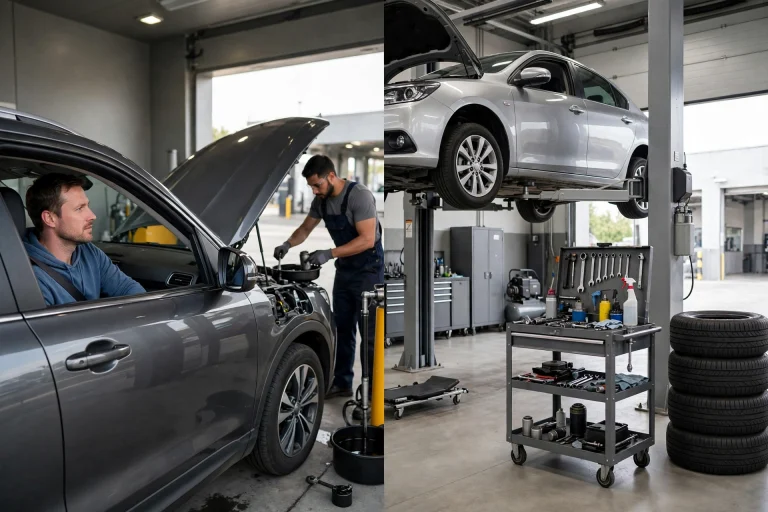
Quick Lube vs Dealership vs Walmart Oil Change: The Visit That Fits Your Car (November 2026)
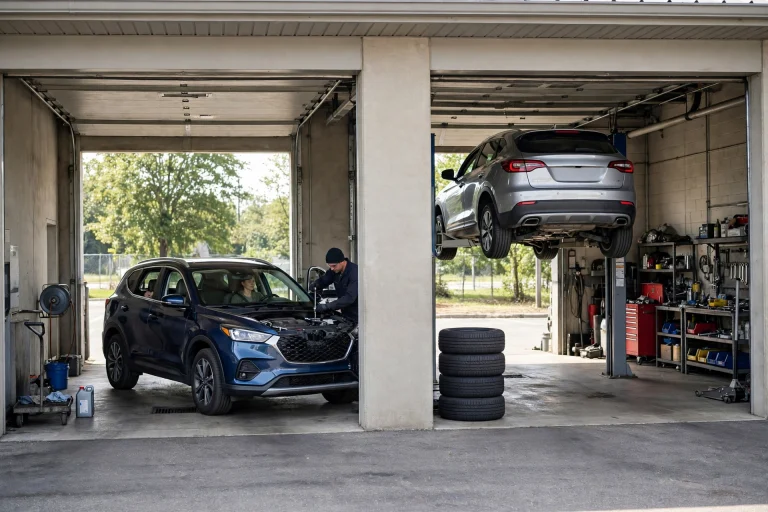
Three places can change your oil this week, and they are not selling the same visit. A quick lube sells minutes, a dealership sells factory knowledge, and Walmart sells an oil change inside your grocery run. The real differences live in what each one cannot do, and that is where this comparison starts.
This guide compares the three visit models using what each side actually publishes: booking rules, inspection lists, timed claims and stated limits. Where a side publishes no national price or fixed time, the guide says so instead of borrowing a number from a roundup, because invented figures help nobody at a service counter.
| The visit | Quick lube | Dealership | Walmart Auto Care Center |
|---|---|---|---|
| How you book | Walk in, no appointment | Appointment expected | Walk in, online booking at some centers |
| Time shape | The service itself is timed in minutes | Plan for hours, often a drop-off | Runs while you shop |
| Factory warranty and recall work | No | Yes, the only one of the three | No |
| Engine diagnostics | Not offered as a service | Yes, factory software and trained technicians | No |
| Tire safety inspection | Varies by chain | Part of the multi-point inspection | No, tire pressure only, in Walmart’s own words |
| National prices published online | No | No | Yes, the only menu of the three |
The Can’t-Do Audit: What Each Option Cannot Do for You
Start with the limits, because each option has one job it does not offer. A quick lube cannot touch your factory warranty or a recall, a dealership cannot hand your car back in fifteen minutes, and Walmart cannot look past fluids, tires and batteries. These limits are structural, and they decide more visits than any advertisement.
A quick lube cannot perform warranty repairs or recalls, and it cannot run diagnostics when a warning light needs an answer. Its world is oil, filters, fluids, wipers and a short maintenance list delivered fast. When your car needs a covered repair or a recall fix, the visit becomes a referral to a dealer.
A dealership cannot do fast, and it cannot do walk-in casual. Its service department runs on appointments, intake paperwork and a multi-point inspection, so the visit is built to take hours rather than minutes. Routine oil changes queue in the same department behind warranty claims, recalls and repairs, and that queue sets the pace.
Walmart cannot do engine work, and its own page draws the line plainly: it does not inspect tires for safety, and only checks and adjusts tire pressure. The Auto Care Center menu stops at oil, fluids, tires and batteries, with no diagnostic or repair service published. Stores without an Auto Care Center cannot help at all.
Read the three limits together and the choice sharpens quickly. If your car needs factory attention, two options are out before price or speed enters the conversation. If it needs nothing but fresh oil, all three stay open, and the decision moves to the visit itself.
Three Different Errands, Not Three Prices
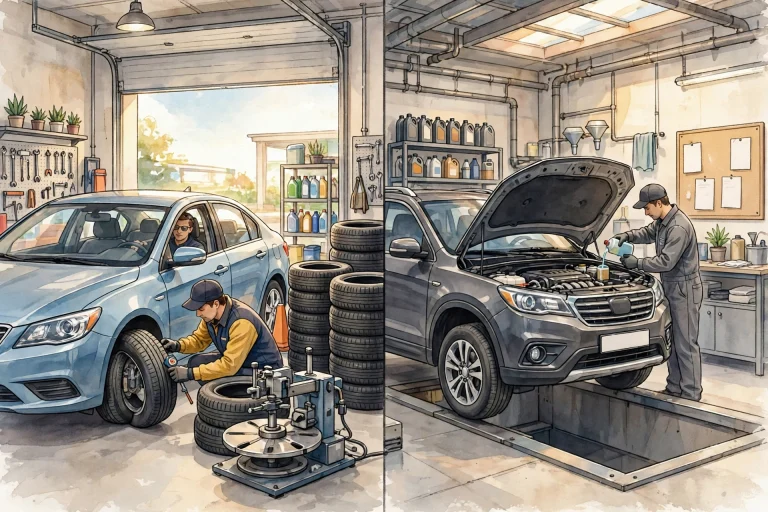
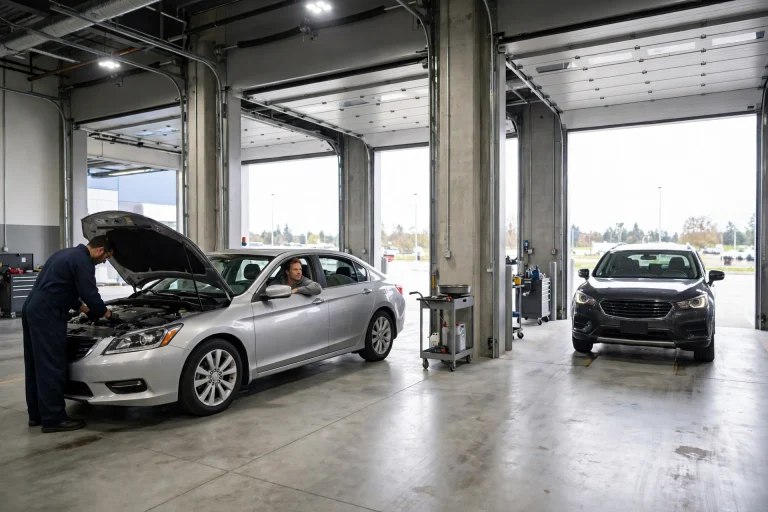
The quick lube visit is a pit stop built around your lunch break. You drive in without an appointment, stay in the car at the drive-thru chains, watch the work happen and leave with a printed record. Chains like Valvoline built the format around staying in your seat, and our Valvoline coupons hub tracks what that visit currently offers.
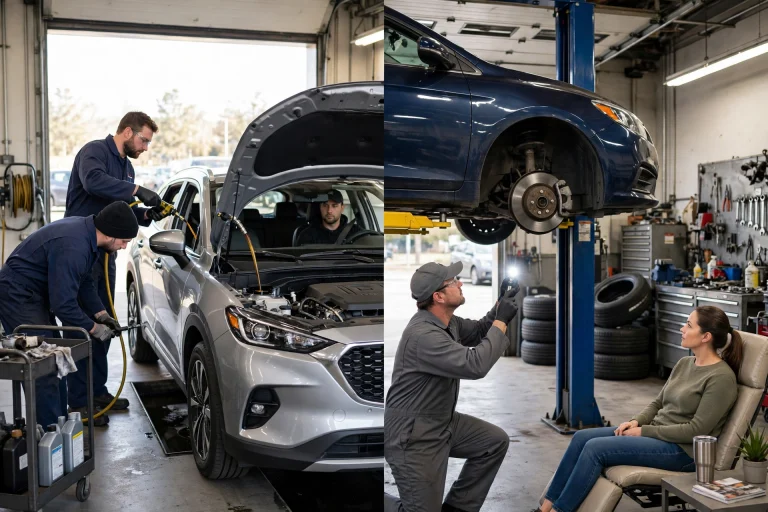
The dealership visit is an appointment you plan a day around. You book ahead, hand over the keys and wait in a lounge or leave the car for hours, in a queue shared with warranty and repair work. You get back a factory record and an inspection by people trained on your exact model.
The Walmart visit hides inside an errand you were already running. You hand the car to the Auto Care Center, do a full grocery shop and collect the keys on your way out, so the wait costs nothing you were not already spending. Anything beyond the center’s published menu, though, means a second trip elsewhere.
Price is where the three models stop being comparable at all. Walmart is the only one that publishes a national price menu online, while quick lube chains quote by store and dealerships quote by model and market. Our cheapest oil change guide follows current prices and offers across chains, because a figure printed here would age out within the season.
The Warranty Line: The One Question That Overrules Everything
If your car is still under its factory warranty, one question outranks speed, scope and convenience: who is allowed to do which work. Covered repairs and recalls belong to the dealership alone, because the manufacturer pays and sets the terms. Routine maintenance is different, and drivers most often get it wrong in the dealership’s favor.
The FTC states it plainly: you do not have to use the dealer for repairs or maintenance to keep your warranty in effect, and it is illegal for a dealer to deny coverage because work was done elsewhere. The exception is free warranty work, which the manufacturer can require its own facilities to perform.
What the law asks in return is proof. The FTC advises keeping records of every oil change, rotation and inspection, because a warranty company can ask for them, and claims fail without them. A dated receipt showing mileage and oil specification is exactly the paper trail that keeps an outside oil change safe.
Drivers holding a paid service contract should read its maintenance clause before picking any counter. The FTC notes these contracts can require the manufacturer’s maintenance schedule, and coverage can end if you skip it. A service contract is separate from the factory warranty, and its rules are the ones printed in your own paperwork.
A recall notice changes the errand completely, because recall repairs are free and only your brand’s franchised dealer can perform them. Neither a quick lube nor Walmart can close a recall, no matter how convenient the visit looks that week. With a recall letter in hand, the dealership is the only stop on the list.
What the Inspection Actually Covers, Side by Side
Every option claims to check your car while the oil drains, but the three checklists are not the same document. Quick lube chains publish theirs item by item, dealerships fold the check into a factory multi-point inspection, and Walmart publishes a shorter courtesy list with one famous gap. The lists show what each visit actually looks at.
Valvoline publishes an 18-point check covering fluids, filters, belts, lights, battery and wipers, and it does not measure tire tread depth. Jiffy Lube builds its Signature Service around a similar published list and adds free fluid top-offs between visits, which our Jiffy Lube coupons hub tracks with the current offers. These checks spot low fluids and tired batteries, not developing mechanical faults.
The dealership inspection is the widest of the three, because it follows the manufacturer’s multi-point form for your model, not a chain-wide list. Factory technicians know which components on that model wear early, and findings feed directly into your warranty records. That depth costs time, one reason the visit stretches into hours.
Walmart publishes its courtesy checks openly: battery performance, air filter, wiper blades, lights, several fluid levels, tire pressure and an exterior windshield wash, all alongside the oil and filter. The same page states the limit in its own words: Walmart does not inspect tires for safety. A damaged tire can roll out completely unflagged.
Time and Appointments, Honestly Measured
Each option talks about time differently, and none of the three clocks measures the same thing. Quick lube chains time the service itself, dealerships absorb your car into a day of scheduled work, and Walmart hides the wait inside your shopping. A fair comparison asks what each clock starts and stops on, not which advertised number sounds smallest.
The published quick lube clocks run from about ten to fifteen minutes, and they cover the service rather than the queue. Take 5 frames its claim around the whole visit, Valvoline around a quarter hour in the car, and Jiffy Lube from hood up to hood down. A Saturday queue can double the visit before work starts.
Dealership time is measured in hours because it includes intake, inspection and a place in the repair queue. JD Power’s 2026 Aftermarket Service Index found that only 17 percent of same-day dealer visits had work completed within an hour, against 49 percent at full-service aftermarket shops. Dropping the car off is the normal pattern.
Walmart publishes no time claim at all, and needs none, because the wait is designed to disappear into your shopping. The measure is whether the car is ready before your cart is full, which depends on how many cars are ahead of you. Arriving early, or booking online where offered, is the only control you have.
The Decision, by What Your Car Needs Next
Forget brand loyalty and look at what your car needs next, because that answer picks the visit for you. The same driver can be right at all three counters in a single year, as the car’s age, warranty status and warning lights change. Five situations come up most often, each pointing at a different door.
When the car is out of warranty, running cleanly and due only for fresh oil, the quick lube is the visit built for that job. You keep the errand inside a lunch break, with a published checklist and a printed record, and nothing needs factory knowledge. This is the visit the quick lube model was designed to win.
When a recall notice has arrived, or the car is under warranty with a symptom you want documented, the dealership is the only correct answer. The recall repair is free, the warranty work is covered, and the visit builds the history behind any later claim. Speed stops mattering when neither other option can do the work at all.
When a warning light is on or a noise you cannot name, skip both fast options and book the dealership. A quick lube changes oil around the problem, Walmart cannot look for it at all, and the dealer has the diagnostics to find it. Fresh oil in an undiagnosed engine is money spent in the wrong order.
When the weekly shop is planned and the car needs only oil, Walmart turns waiting time into the service itself. You hand over the keys, fill a cart and collect a car with fresh oil and checked fluids. A tire that needs judging for safety, or anything mechanical, still means a different shop on a different day.
When you are far from home and the oil is due, a national chain gives you a record any of its stores can see next visit. The visit is documented the same way everywhere, which a one-off shop cannot promise. It is the closest thing to a service history that follows the car.
Frequently Asked Questions
Does an oil change at a quick lube void my factory warranty?
No. The FTC says you do not have to use the dealer for maintenance to keep your warranty in effect, and a dealer cannot deny coverage because routine work was done elsewhere. Keep dated receipts showing the oil specification and mileage.
Can Walmart do everything a quick lube can?
No. Walmart covers oil, fluids, tires and batteries, and its own page says it does not inspect tires for safety. Quick lube chains add published multi-point checks, and some include free fluid top-offs between visits, which Walmart does not offer.
Why does the dealership take so much longer?
The dealer visit includes intake paperwork, a factory multi-point inspection and a place in a queue shared with warranty and repair work. JD Power found only 17 percent of same-day dealer visits finish within an hour, so hours are the normal shape of the visit.
Do I need an appointment at each option?
Quick lube chains are built for walk-ins with no appointment. Dealerships expect you to book ahead and often take the car for hours. Walmart centers accept walk-ins, and some locations let you book a time online before you arrive.
Which of the three is the cheapest?
There is no single honest answer, because only Walmart publishes national prices while chains and dealers quote locally. Our cheapest oil change guide tracks current prices and offers across providers, and it is the right place to compare today’s numbers.
What happens if the inspection finds something wrong?
At Walmart, anything beyond fluids and tire pressure means a referral to another shop. A quick lube can handle small maintenance items and will flag the rest. At the dealership, the same visit can move straight into diagnosis and repair.
Facts in this guide were checked on November 15, 2026, against Walmart’s published Auto Care Center page, the FTC’s consumer warranty guidance and JD Power’s 2026 Aftermarket Service Index. Where a provider publishes no national price or time, this guide says so rather than estimating one, and the checks will be repeated as the pages change.